 ProZ.com translation contests » |

 0
0 Source text in English | Translation by BUSRA YETISEN (#31273) |
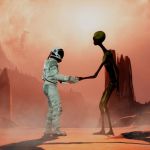
| Imagine dining in a European capital where you do not know the local language. The waiter speaks little English, but by hook or by crook you manage to order something on the menu that you recognise, eat and pay for. Now picture instead that, after a hike goes wrong, you emerge, starving, in an Amazonian village. The people there have no idea what to make of you. You mime chewing sounds, which they mistake for your primitive tongue. When you raise your hands to signify surrender, they think you are launching an attack. Communicating without a shared context is hard. For example, radioactive sites must be left undisturbed for tens of thousands of years; yet, given that the English of just 1,000 years ago is now unintelligible to most of its modern speakers, agencies have struggled to create warnings to accompany nuclear waste. Committees responsible for doing so have come up with everything from towering concrete spikes, to Edvard Munch’s “The Scream”, to plants genetically modified to turn an alarming blue. None is guaranteed to be future-proof. Some of the same people who worked on these waste-site messages have also been part of an even bigger challenge: communicating with extraterrestrial life. This is the subject of “Extraterrestrial Languages”, a new book by Daniel Oberhaus, a journalist at Wired. Nothing is known about how extraterrestrials might take in information. A pair of plaques sent in the early 1970s with Pioneer 10 and 11, two spacecraft, show nude human beings and a rough map to find Earth—rudimentary stuff, but even that assumes aliens can see. Since such craft have no more than an infinitesimal chance of being found, radio broadcasts from Earth, travelling at the speed of light, are more likely to make contact. But just as a terrestrial radio must be tuned to the right frequency, so must the interstellar kind. How would aliens happen upon the correct one? The Pioneer plaque gives a hint in the form of a basic diagram of a hydrogen atom, the magnetic polarity of which flips at regular intervals, with a frequency of 1,420MHz. Since hydrogen is the most abundant element in the universe, the hope is that this sketch might act as a sort of telephone number. | 현지 언어를 모르는 유럽 수도에서 식사를한다고 상상해보세요. 웨이터는 영어를 거의 구사하지 못하지만 훅이나 사기꾼으로 인식하고 먹고 지불하는 메뉴를 주문할 수 있습니다. 이제 하이킹이 잘못되면 아마존 마을에 굶주린 채 나타나게 됩니다. 거기에 사는 사람들은 당신을 어떻게 만들어야 할지 모릅니다. 당신은 씹는 소리를 흉내내어 원시 혀로 착각합니다. 항복을 의미하기 위해 손을 들 때 그들은 당신이 공격을 시작한다고 생각합니다. 공유 된 문맥 없이 소통하는 것은 어렵습니다. 예를 들어, 방사성 사이트는 수만 년 동안 방해받지 않고 그대로 두어야합니다. 그러나 불과 1,000 년 전의 영어가 현재 대부분의 현대 화자들이 이해할 수 없다는 점을 감안할 때, 기관들은 핵 폐기물에 수반되는 경고를 만드는 데 어려움을 겪고 있습니다. 이를 담당하는위원회는 우뚝 솟은 콘크리트 스파이크부터 Edvard Munch의 'The Scream', 놀라운 파란색으로 변하도록 유전자 변형 된 식물에 이르기까지 모든 것을 고안했습니다. 미래를 보장 할 수있는 것은 없습니다. 이러한 폐기물 현장 메시지를 작업 한 동일한 사람들 중 일부는 외계 생명체와의 소통이라는 훨씬 더 큰 도전의 일부였습니다. 이것은 Wired의 기자 인 Daniel Oberhaus의 신간“외계 언어”의 주제입니다. 외계인이 어떻게 정보를 가져올 수 있는지에 대해서는 알려진 바가 없습니다. 1970 년대 초 파이오니어 10 호와 11 호 우주선 두 대와 함께 보낸 한 쌍의 명판은 누드 인간과 지구를 찾을 수있는 대략적인지도를 보여줍니다. 초보적인 물건이지만 외계인도 볼 수 있다고 가정합니다. 그러한 우주선은 발견 될 가능성이 극히 적기 때문에 빛의 속도로 이동하는 지구 라디오 방송이 접촉 할 가능성이 더 높습니다. 그러나 지상파 라디오가 올바른 주파수로 조정되어야하는 것처럼 성간 종류도 그렇습니다. 외계인은 올바른 사람에게 어떻게 일어날까요? 파이오니어 플라크는 1,420MHz의 주파수로 일정한 간격으로 자기 극성이 바뀌는 수소 원자의 기본 다이어그램 형태로 힌트를 제공합니다. 수소는 우주에서 가장 풍부한 원소이기 때문에이 스케치가 일종의 전화 번호 역할을 할 수 있기를 희망합니다. |

 Discuss this entry
ProZ.com translation contests
ProZ.com translation contests offer a fun way to take a break from your normal routine while testing and honing your skills with fellow translators.
Contests overview
Professional translators (and some novices) take part in ProZ.com translation contests for fun, friendly competition and prizes.Propose a source text
Suggest and provide feedback on source texts for upcoming contests.Winners
See who has won previously.Statistics
See contest statistics.ProZ.com Translation Contests. Patent pending.
